
KEY BENEFITS
-
Supports tissue repair and structural remodeling signaling pathways in laboratory research
-
Encourages cellular migration and coordinated recovery responses
-
Commonly studied for its role in actin regulation and cytoskeletal dynamics
-
May assist inflammatory response modulation in experimental models
-
Frequently explored in musculoskeletal and soft-tissue research settings
-
Commonly stacked with other recovery-focused peptides in research protocols
Full Description
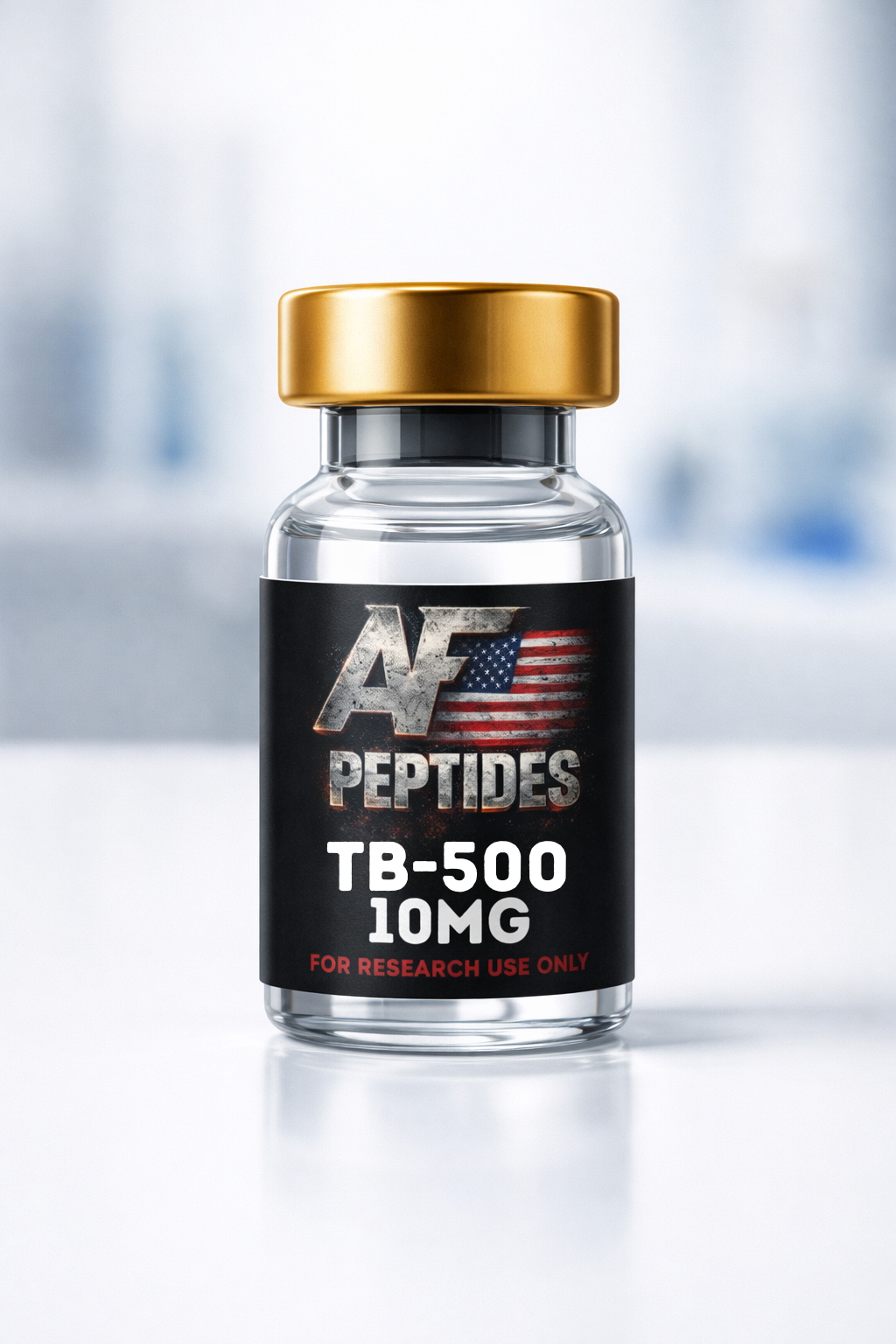
TB-500 is a synthetic peptide modeled after the biologically active region of thymosin beta-4, a naturally occurring protein involved in cellular migration, cytoskeletal organization, and tissue repair processes. In pre-clinical and experimental research, TB-500 is primarily investigated for its influence on actin dynamics, a central component of the cellular cytoskeleton that governs cell movement, shape, and structural organization.
Research has focused on TB-500’s role in coordinating cellular migration, tissue remodeling, and recovery responses following mechanical stress or injury. Through its involvement in cytoskeletal regulation and cellular trafficking pathways, TB-500 is widely studied in regenerative and musculoskeletal research models that examine how cells reorganize and respond during structural repair and recovery processes.
TB-500 is also commonly explored in conjunction with other peptides aimed at connective tissue and muscular recovery, particularly in research contexts centered on physical stress, training-related strain, and soft-tissue adaptation.
Commonly Explored For (Research Use Only)
-
Muscle and connective-tissue recovery signaling models
-
Cellular migration and cytoskeletal regulation studies
-
Tissue remodeling and structural repair pathways
-
Inflammatory response coordination and modulation research
-
Training-related wear-and-tear and physical stress response investigations