KEY BENEFITS
-
Supports research into how cells use fat as a fuel source
-
Commonly studied for its role in cellular energy and metabolic pathways
-
Injectable format allows controlled systemic delivery in research protocols
-
Frequently explored in performance and recovery-focused research models
-
Widely used in studies related to endurance and energy efficiency signaling
Full Description
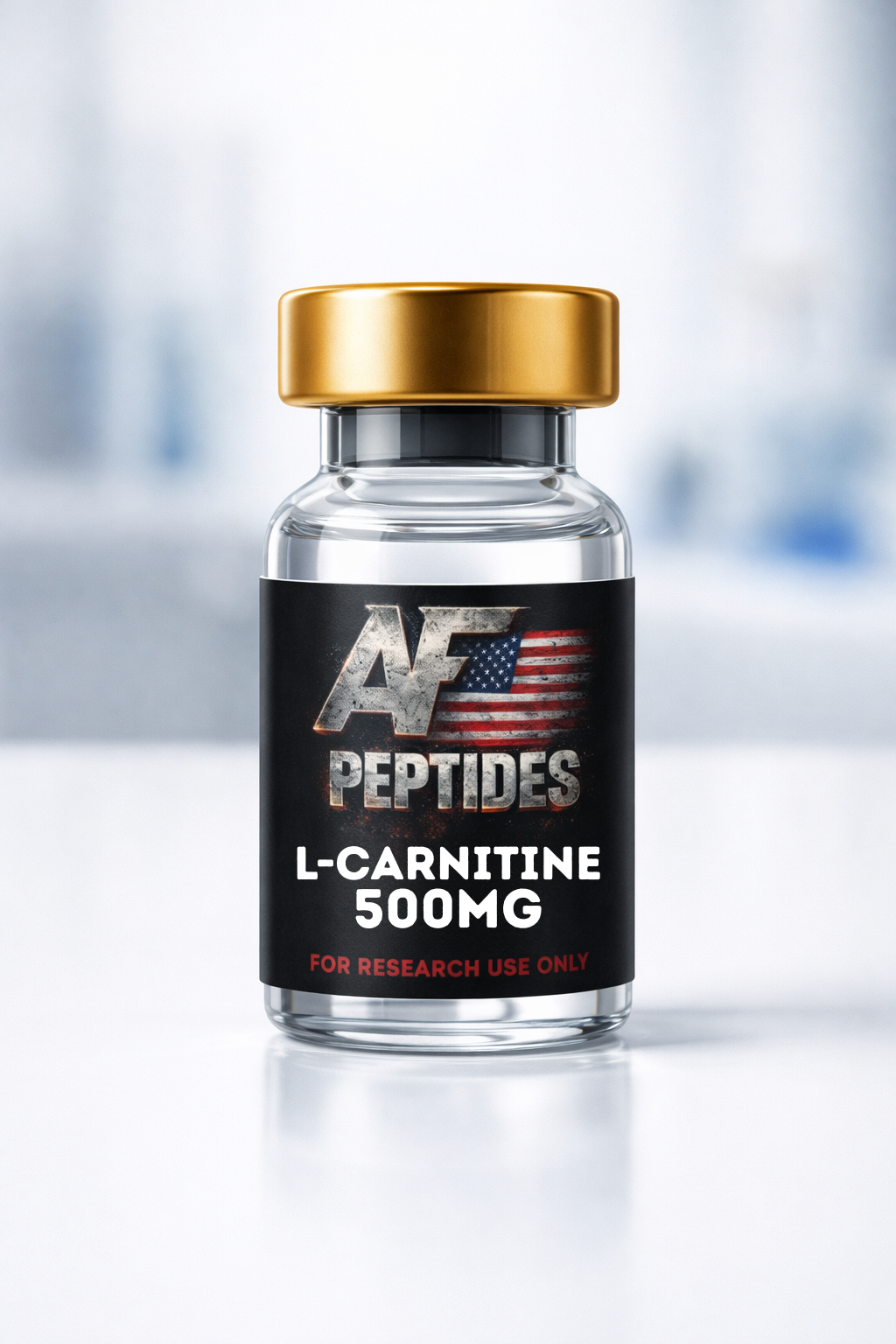
L-Carnitine is a naturally occurring amino-acid–derived compound that plays an important role in how cells transport and use fatty acids for energy. In laboratory and pre-clinical research, L-Carnitine is commonly studied for its involvement in cellular energy production and metabolic efficiency.
Specifically, L-Carnitine is involved in transporting long-chain fatty acids into the mitochondria, where they can be used to produce energy. Because of this role, it is frequently explored in research models focused on fat utilization, metabolic performance, and endurance-related cellular signaling.
The injectable format is used in controlled research settings when precise dosing and consistent systemic exposure are required. This makes L-Carnitine injectable a common research tool for studies evaluating metabolism, physical performance signaling, and recovery-related energy pathways.
Commonly Explored For (Research Use Only)
-
Fat utilization and lipid metabolism signaling
-
Cellular and mitochondrial energy production pathways
-
Endurance and performance-related research models
-
Metabolic efficiency and fuel-partitioning studies
-
Recovery and physical stress response research