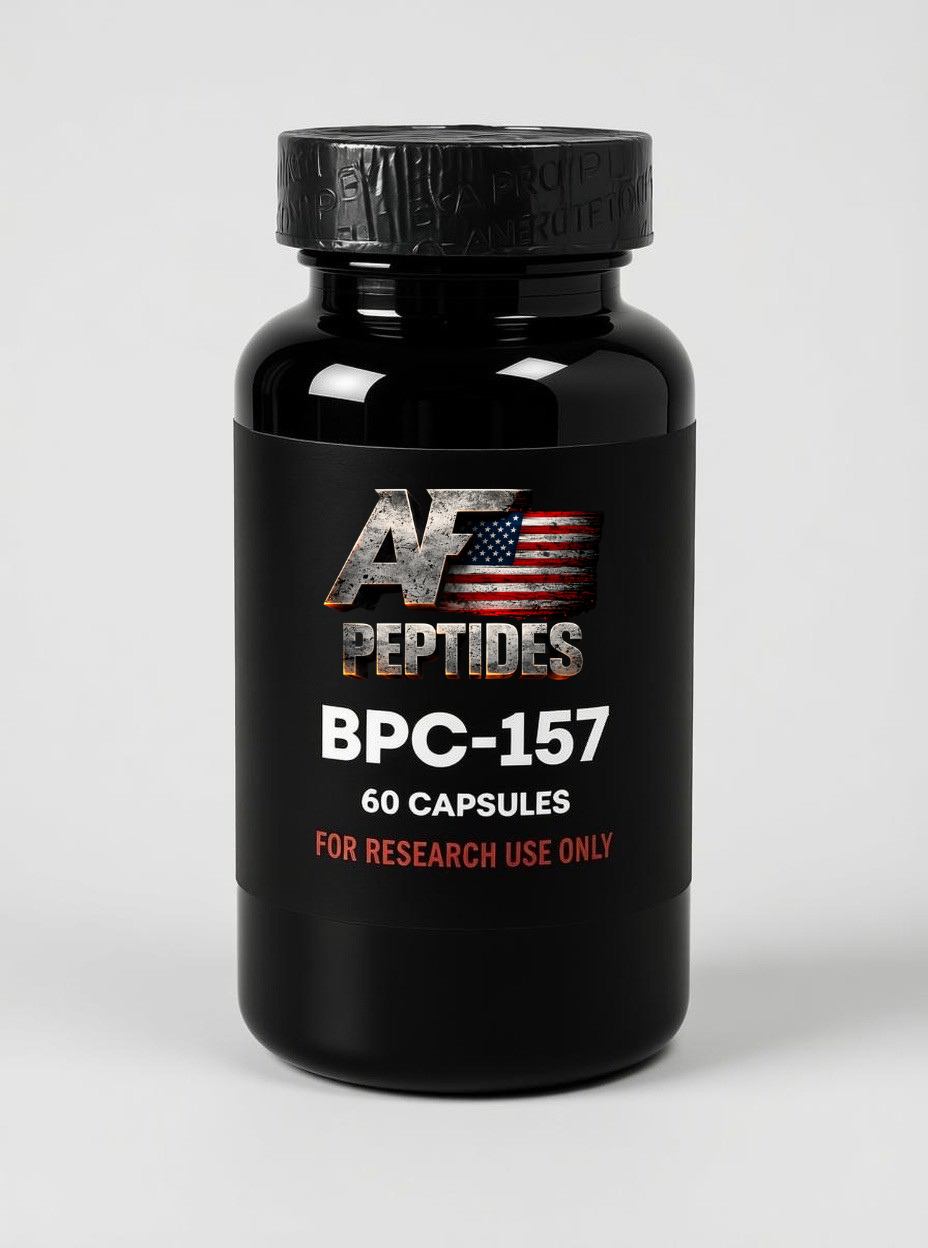
- 60 capsules / container
- 525mcg / capsule
KEY BENEFITS
-
Supports cellular signaling involved in tissue repair and regenerative pathways in laboratory research
-
Commonly studied for its role in inflammatory modulation and cellular stress response
-
Oral delivery format allows exploration of gastrointestinal and systemic signaling models
-
Derived from a naturally occurring body protection peptide sequence (BPC)
Full Description
BPC-157 (Body Protection Compound-157) is a synthetic peptide fragment derived from a naturally occurring protective protein found in gastric tissue. It has become widely utilized in research settings for its involvement in signaling pathways associated with cellular repair, inflammation regulation, and tissue integrity.
In experimental and pre-clinical models, BPC-157 has demonstrated activity across multiple biological systems, including connective tissue, vascular signaling, and gastrointestinal tissue. Its ability to influence angiogenic signaling, nitric-oxide–related pathways, and inflammatory cascades makes it a frequently studied compound in regenerative and recovery-focused research protocols.
This capsule format is intended to support research models that focus on oral exposure, gastrointestinal interaction, and downstream systemic signaling. The encapsulated format provides consistency and convenience for controlled laboratory handling when investigating gut-related and whole-body response pathways.
Commonly Explored For (Research Use Only)
-
Gastrointestinal tissue integrity and mucosal protection models
-
Tendon, ligament, and connective tissue repair pathways
-
Inflammatory signaling and immune response modulation
-
Angiogenesis and vascular support mechanisms
-
Cellular recovery and regenerative biology studies