KEY BENEFITS
-
Supports cellular repair and regenerative signaling pathways in laboratory research
-
Commonly studied for its role in inflammation modulation and tissue-level recovery mechanisms
-
Injectable format allows direct systemic exposure for controlled pharmacokinetic and biodistribution studies
-
Widely researched for its involvement in connective tissue, vascular, and soft-tissue signaling models
Full Description
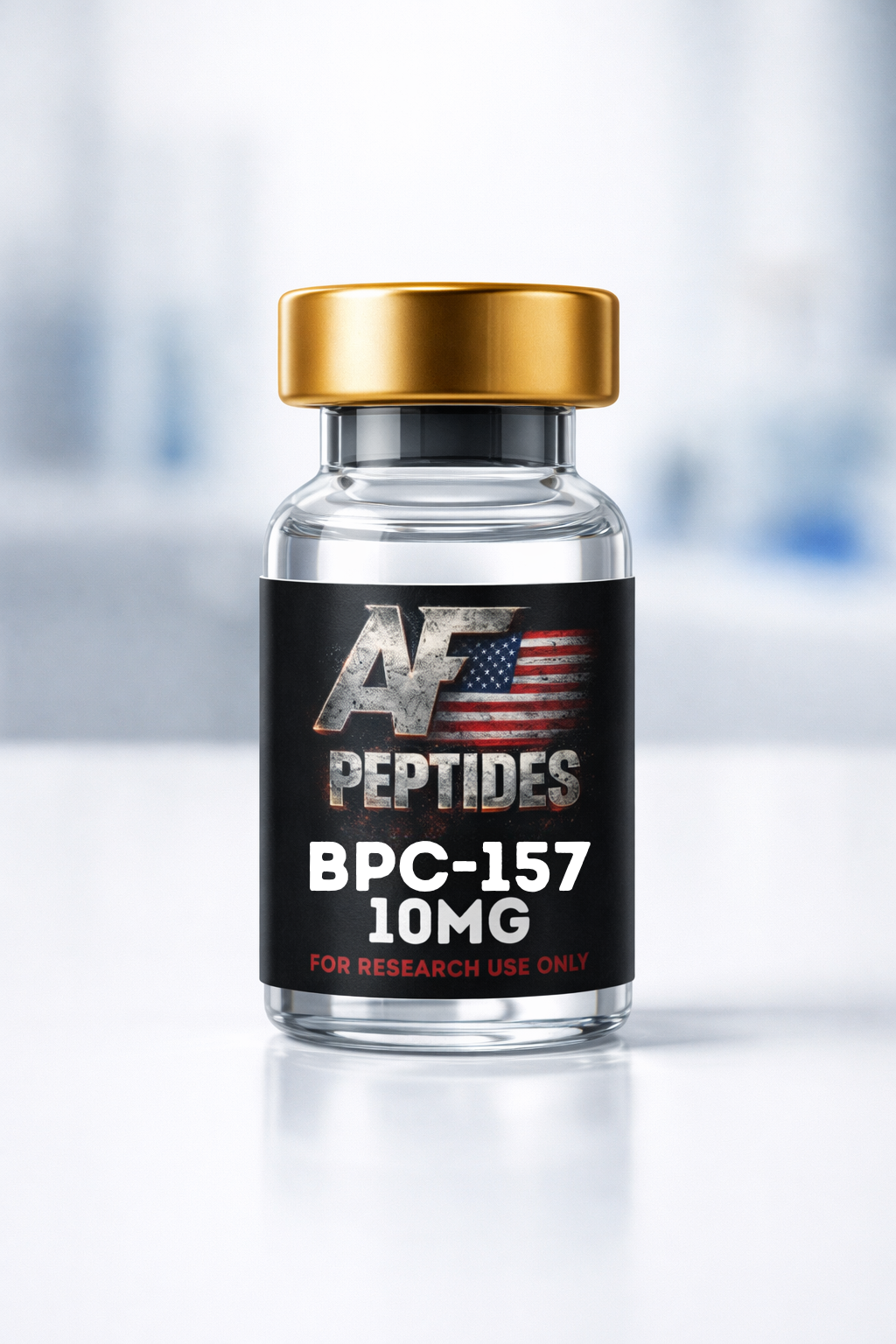
BPC-157 (Body Protection Compound-157) is a synthetic peptide derived from a naturally occurring gastric protective protein sequence. It is extensively utilized in pre-clinical and experimental research for its broad activity across cellular repair, inflammatory regulation, and tissue-integrity pathways.
In laboratory models, injectable BPC-157 is commonly selected when investigators require precise control of delivery and rapid systemic availability. Research has shown that BPC-157 participates in signaling networks associated with angiogenesis, nitric-oxide–related pathways, fibroblast activity, and extracellular matrix remodeling. These mechanisms make it a frequent subject of study in protocols focused on wound response, soft-tissue recovery, and musculoskeletal research.
The injectable format is particularly suited for studies evaluating localized versus systemic peptide distribution, dose-response relationships, and time-dependent biological effects in regenerative and recovery-oriented research environments.
Commonly Explored For (Research Use Only)
-
Tendon, ligament, and muscle repair signaling pathways
-
Soft-tissue and wound-healing models
-
Inflammatory cascade and immune-modulation studies
-
Angiogenesis and microvascular signaling research
-
Cellular recovery and tissue-regeneration